FPV Strike Accuracy with Terminal Guidance: What It Depends On
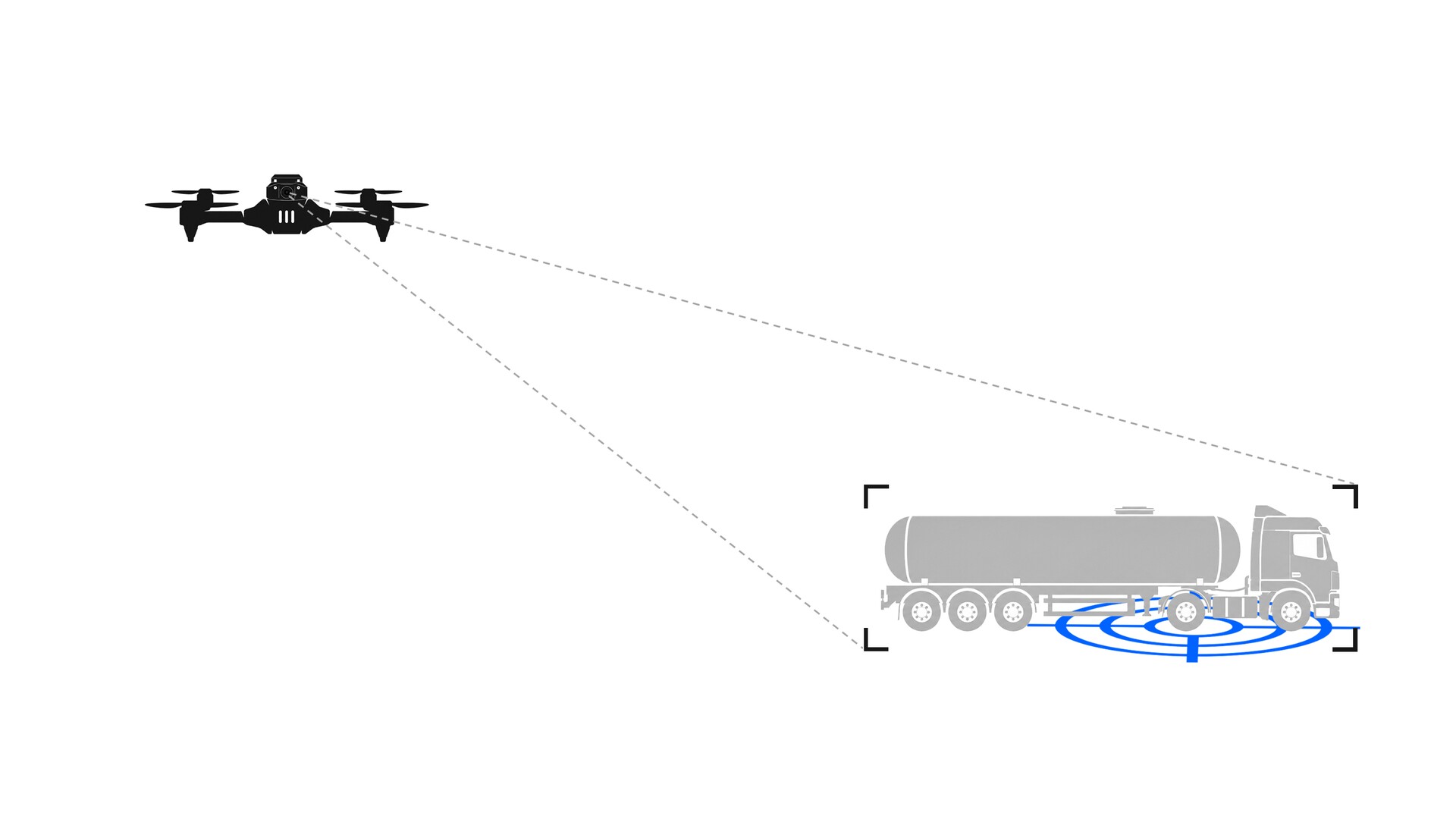
A terminal guidance module significantly increases the probability of a hit, but FPV strike accuracy with terminal guidance is not a fixed number. It is made up of many factors, from how the pilot selected the target to how the specific drone is tuned. Let’s look at the main ones.
What Accuracy Terminal Guidance Delivers
In general terms, an FPV drone with terminal guidance hits a stationary target within a 3 × 3 m square around the aim point. For most typical targets this is enough: vehicles, shelters and firing positions are larger, so a hit inside that square effectively means a hit on the object.
For a moving target, the criterion is different. What matters is not hitting a specific point on the ground, but hitting within the outline of the object itself. The target keeps shifting, so the module tracks it until the very last moment and steers the drone so that the impact point stays on the target’s body rather than next to it.
A special case is when the moving target was detected by the neural network. In this case, the module aims for the center of the detected object. It doesn’t just hold the point the pilot once selected — it continuously refines where the object is in the frame and directs the drone to its geometric center. This reduces the risk of hitting the edge of the target or missing when the object sharply changes direction.
However, these figures reflect performance under normal conditions. Actual accuracy in each specific flight depends on a number of factors, which we’ll cover below.
Target Lock-On Range
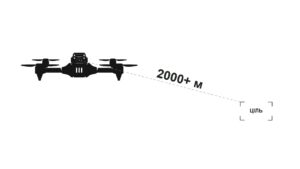
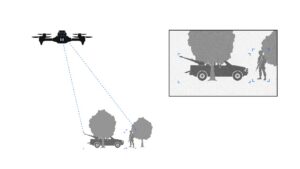
Accuracy starts at the moment we tell the module what exactly to attack. From more than a kilometer away, a target on the screen often looks like 2–3 pixels. It is possible to lock onto such a point, but it is hard to select a specific part of the object.
For this, the ZIR module has a zoom window. It magnifies the area of the image around the crosshair, so the pilot sees the target in more detail and can set the aim point more precisely even at long range.
Aim Correction During the Attack
It is important that the pilot does not lose control after lock-on. If video and control are maintained during the strike, the operator can refine the impact point with the stick. For example, they can shift the crosshair from the edge of the object to its center or to a more vulnerable area.
The closer the drone gets to the target, the better it can be seen. That’s why the ability to correct the aim in the final phase directly affects the result.
Neural Network
A conventional tracker follows the area of the image selected by the pilot. If, at long range, the crosshair landed slightly beside the target, the tracker will guide the drone exactly to that point.
With a neural network, it’s a different story. As the drone approaches, the module recognizes the object itself and guides the drone to its center, even if the initial lock-on was imperfect. Neural network target recognition is especially useful when the target was only a few pixels at long range.
For moving targets, the neural network matters even more. A moving object changes its angle and size in the frame and is partially hidden behind trees or buildings. The neural network recognizes it anew in every frame, so the module keeps guiding the drone to the center of the object rather than to where it was a second ago.
Quality of the Control Algorithm
The module doesn’t just see the target — it converts the target’s position in the frame into commands for the flight controller. The quality of this algorithm determines how smoothly and without oscillation the drone heads toward the target, how quickly it responds to changes, and whether it “overshoots” the aim point in the last few meters.
Drone Flight Speed
High speed shortens the approach time but leaves less time for correction. Low speed provides more accuracy, but the drone stays in the engagement zone longer and loses out to a moving target.
The ZIR module offers speed switching depending on the task. The pilot selects the optimal mode for the specific target and situation.
Direction of the Moving Target
Terminal guidance on a moving target is a separate challenge. The hardest is attacking a target moving toward the drone: the closing speed is at its maximum and there is the least time for correction. An attack from the side or from behind gives the module more time for tracking and a more stable picture.
Wind Strength and Direction
Wind directly affects the trajectory. The easiest conditions are a headwind: the drone flies steadily, and it’s easier for the algorithm to compensate for drift. The hardest is when the wind blows from behind and from the side at the same time: the drone drifts, picks up excess speed, and it becomes harder to hold the aim point in the last few meters.
Balancing and Tuning for a Specific Airframe
The same module can show different accuracy on different drones. Vibrations, poorly balanced propellers, and incorrect PID or camera settings degrade both the image and the response to commands.
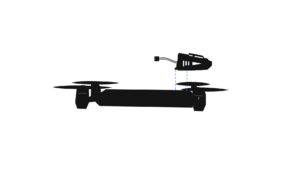
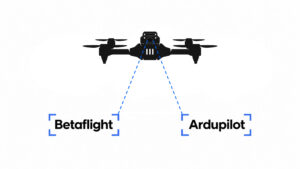
That’s why FPV strike accuracy with terminal guidance also depends on how the drone is prepared: balancing, flight controller tuning, and configuring the system for the specific airframe. For ZIR modules, we provide step-by-step integration guides for Betaflight and ArduPilot.
Conclusion
High accuracy is the sum of several factors: quality target lock-on, the ability to correct, a neural network, a good control algorithm, the right speed, and a well-prepared drone. The ZIR module covers most of these points: a zoom window, impact point refinement, target recognition, and speed switching. The rest depends on the pilot and how well the airframe is prepared.