Why an Automatic Terminal Guidance Module (TGM) Should Be Installed on Every Single Drone
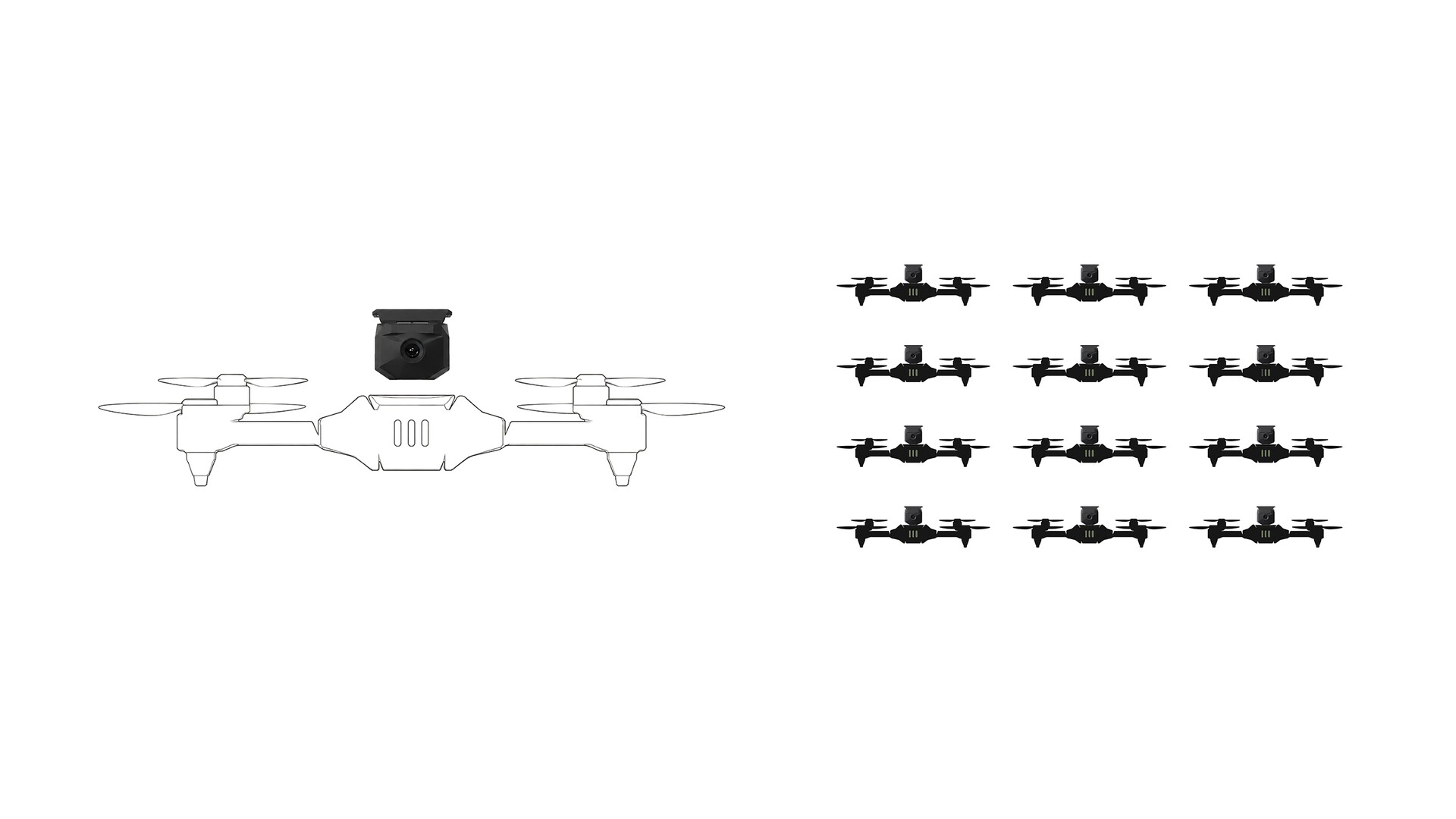
Today, terminal guidance modules are often installed on only some of the drones: “for difficult targets” or “for experienced pilots.” The rest fly their missions under manual control. But this very approach leads to the greatest drone losses and the most missed targets. Let’s look at why the TGM should be seen not as an option but as basic equipment of every strike FPV drone.
You Can’t Predict in Advance Which Sortie Will Be Difficult
Before a sortie, nobody knows whether EW will be active along the route, whether the terrain will block direct radio line of sight, or whether the target will start moving. The situation can change within minutes. A drone that was meant to perform a “simple” task can end up in exactly the conditions where hitting the target is unlikely without terminal guidance.
If the module is installed on only some of the drones, the unit is guessing every time. And a mistake in that choice means a lost drone and a missed target.
Every Miss Costs More Than It Seems
A lost FPV drone is not just a frame and motors. It is the warhead, the battery, the crew’s time, the risk to the crew at the position, and, above all, a target that remains combat-capable. Often several drones are spent on one successful hit, and every failed sortie adds to these costs.
Terminal guidance raises the likelihood that all the resources invested will deliver a result on the first sortie.
Operating Without a Relay
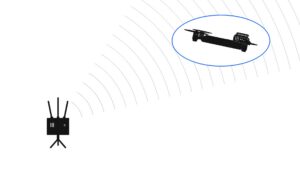
To maintain a radio link with the drone at long range or behind folds of terrain, units often use relays on a separate drone or a mast. They pass control signals and video between the pilot and the strike drone. A relay is extra equipment, an extra crew, an extra target for the enemy, and one more link whose failure breaks the mission.
The main reason a relay is needed is the loss of the link on the final leg, when the drone descends to the target and leaves the zone of direct radio line of sight. The TGM solves exactly this problem: once the target is locked, the drone no longer needs a radio channel, and the module guides it on its own until the strike. So with a TGM, many tasks can be done without a relay, freeing up personnel and equipment and saving time.
Digital or Analog Picture — Your Choice
The module has its own camera and produces a video signal in both analog and digital formats. The unit chooses the option that suits its available equipment and tasks, without changing its usual workflow.
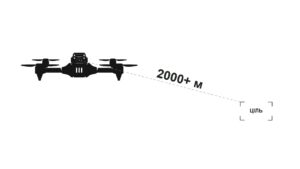
Digital video has higher resolution and clarity than analog. A target that looks like a few blurry pixels in an analog signal can already be recognized and locked on in a digital image. This makes it possible to detect and lock on to a target from a greater distance, make decisions earlier, and have more time for the attack.
What Terminal Guidance Gives You on Every Drone
- EW resistance on the final leg. Once the target is locked, jamming or loss of the link no longer breaks the attack.
- Protection against signal loss along the route. If the link with the remote controller is lost (RX-lost), the module automatically switches the drone to Cruise mode, and the pilot has a chance to regain control.
- Consistent results regardless of the pilot. Even an experienced operator gets tired, and a beginner lacks practice. Terminal guidance delivers a consistent result: the pilot brings the drone to the target area, and the system provides the accuracy of the strike.
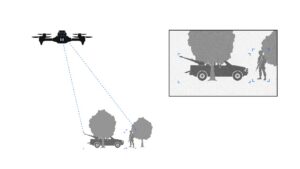
- Hitting moving and low-visibility targets. Assistant mode uses a neural network to automatically detect and track vehicles, while Manual mode lets you attack dugouts and camouflaged positions.
- Greater strike depth. The radio horizon limit on the final leg stops being critical.
One Standard for the Whole Fleet
When all of a unit’s drones have the same configuration, it is easier to train pilots, plan sorties, and maintain equipment. There is no need to run two different training programs or to decide before every sortie which drone to equip with a module. Any drone in the fleet is ready for any task.
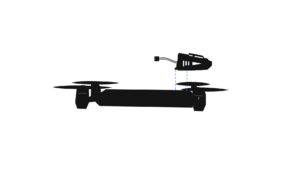
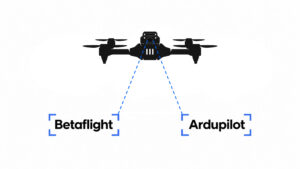
ZIR modules integrate into the drone’s standard configuration: they connect to the flight controller and VTX, are controlled from the standard remote, and need no additional equipment at the position. Versions are available for Betaflight (including MILBETA) with MILELRS support, as well as for Ardupilot.
What a Sortie with a TGM Looks Like
The pilot takes off and brings the drone to the target area. In EW zones or if the signal is lost, the drone holds course and altitude in Cruise mode. Approaching the target, the pilot sees it in the video from the module’s camera, chooses Assistant mode for vehicles or Manual mode for shelters, and locks on to the target. The pilot then activates the strike, and the module guides the drone to the target on its own, even if the link is lost over the last hundreds of meters.
The decision to attack is always made by a human. The system only takes over the hardest and most vulnerable part of the work.
ZIR TGM: All These Tasks in One Module
Everything described above — passing through EW zones, operating without a relay, locking on from long range, consistent results regardless of the pilot — is done by a single device: the ZIR automatic terminal guidance module. No separate systems are needed for each task: the module can be installed on any FPV kamikaze drone.
ZIR TGM capabilities:
| Capability | What it gives you |
|---|---|
| Automatic terminal guidance | Once the target is locked, the module guides the drone on its own until the strike, without the pilot’s involvement and regardless of whether a radio link is available |
| Manual mode | Target lock by the operator: dugouts, shelters, camouflaged equipment. Impact point correction with the right stick |
| Assistant mode | A neural network automatically detects vehicles in the detection zone and provides stable target tracking |
| Lock-on range | Passenger car — up to 1,000 m, truck — up to 1,500 m |
| Multiple targets | Simultaneous detection of several targets in the detection zone, with selection of the priority one |
| Cruise mode | Heading and altitude hold, crosswind compensation using optical flow data, automatic selection of pitch angle and throttle for maximum range |
| Signal loss protection | Automatic switch to Cruise mode on loss of the control signal (RX-lost) |
| Radio silence | Flight with the VTX switched off on selected sections of the route |
| Operation without a relay | Loss of the link on the final leg does not break the attack, so in many tasks no relay is needed |
| Video output | Digital or analog video signal, your choice. Digital video allows locking on to a target from a greater distance |
| Compatibility | Betaflight 4.4.3–4.5.x and MILBETA, MILELRS support; Ardupilot version with optical navigation without GPS |
| Integration | Connection to the flight controller and the standard VTX, control from the remote, setup through a web interface |
Terminal guidance is not an option for selected tasks but a basic part of a modern strike FPV drone, like the camera or the video transmitter. A drone without it depends on luck; a drone with the ZIR TGM depends on the system.
Want to equip your drone fleet with ZIR modules? Write to us and we will help you choose a solution and set up the integration.